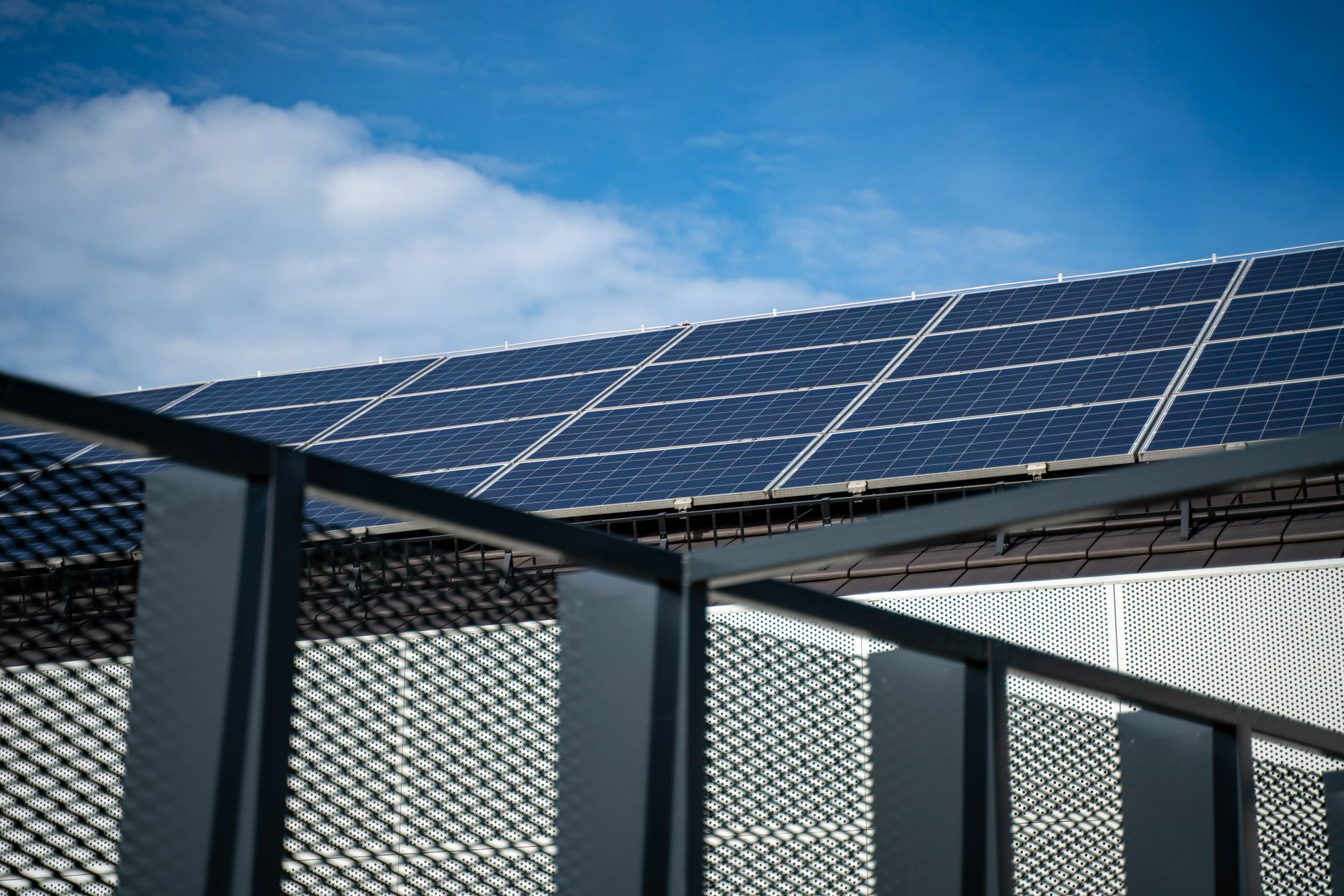
Photo: Vladimir Srajber / Pexels
Low-carbon energy is energy produced with relatively few greenhouse gas emissions compared with fossil fuels. It does not mean zero emissions. For solar air conditioning, the practical questions are which electricity source powers the unit at each moment and what impact the whole installation has.
Low-carbon and renewable are related, but different
Solar photovoltaic electricity is both renewable and low carbon. French transmission operator RTE also counts hydro, wind and nuclear power among low-carbon electricity sources, although nuclear power is not renewable. Low-carbon describes emissions; renewable describes the resource. Neither term removes the need to consider life-cycle impacts.
A solar panel does not burn fuel to generate electricity, but manufacturing, transport, installation and end-of-life treatment still have a footprint. ADEME therefore assesses photovoltaic electricity over its full life cycle. Low-carbon energy is a more accurate description than emission-free energy.
From sunlight to cooling: follow three flows
| Source | Role in the installation | What to check |
|---|---|---|
| Solar panels | Generate electricity when sunlight is available. | Output and the share used directly by the air conditioner. |
| Battery | Stores some generated electricity for later; it does not create energy. | Source of the charge, electricity delivered and losses. |
| Grid | Supplies the unit when local generation and storage are insufficient. | Electricity drawn and the emissions associated with the location and time of use. |
Self-consumption means using electricity where it is generated. A battery can shift that use to another time, but also adds losses and a manufacturing footprint. ADEME examines these effects separately by region: the result for one site cannot simply be applied to another.
Where SoliZé fits
SoliZé, developed by HélioSun Caraïbes and distributed in France by MSR Environnement, is presented as an air conditioner that gives priority to electricity from solar panels, then switches to its batteries and the grid as conditions change. That solar priority makes it possible to use locally produced low-carbon energy. On its own, it does not establish a quantified emissions reduction for every installation.
What should be measured before claiming a carbon saving?
- Measured solar generation and the share actually used by the air conditioner.
- Electricity stored and delivered, including battery losses.
- Grid electricity used during operation and the relevant electricity mix at the site.
- The unit's electricity use at the same level of comfort, compared with a defined reference system.
- The calculation boundary: manufacturing and end-of-life treatment of panels, battery and equipment if making a life-cycle claim.
Low-carbon energy is a useful term when the source and period are clear. For a solar cooling project, MSR can help define the need, equipment and measurements before turning an ambition into a measured result.
Explore SoliZé solar air conditioning