INTEGRATED AGRICULTURAL DEVELOPMENT · OCTOBER 2026
From water
to agricultural
production.
Agricultural Engineering & Hydroponics
An integrated programme for soil irrigation, NFT hydroponics and solar infrastructure, designed for Africa’s territories and agricultural operations.
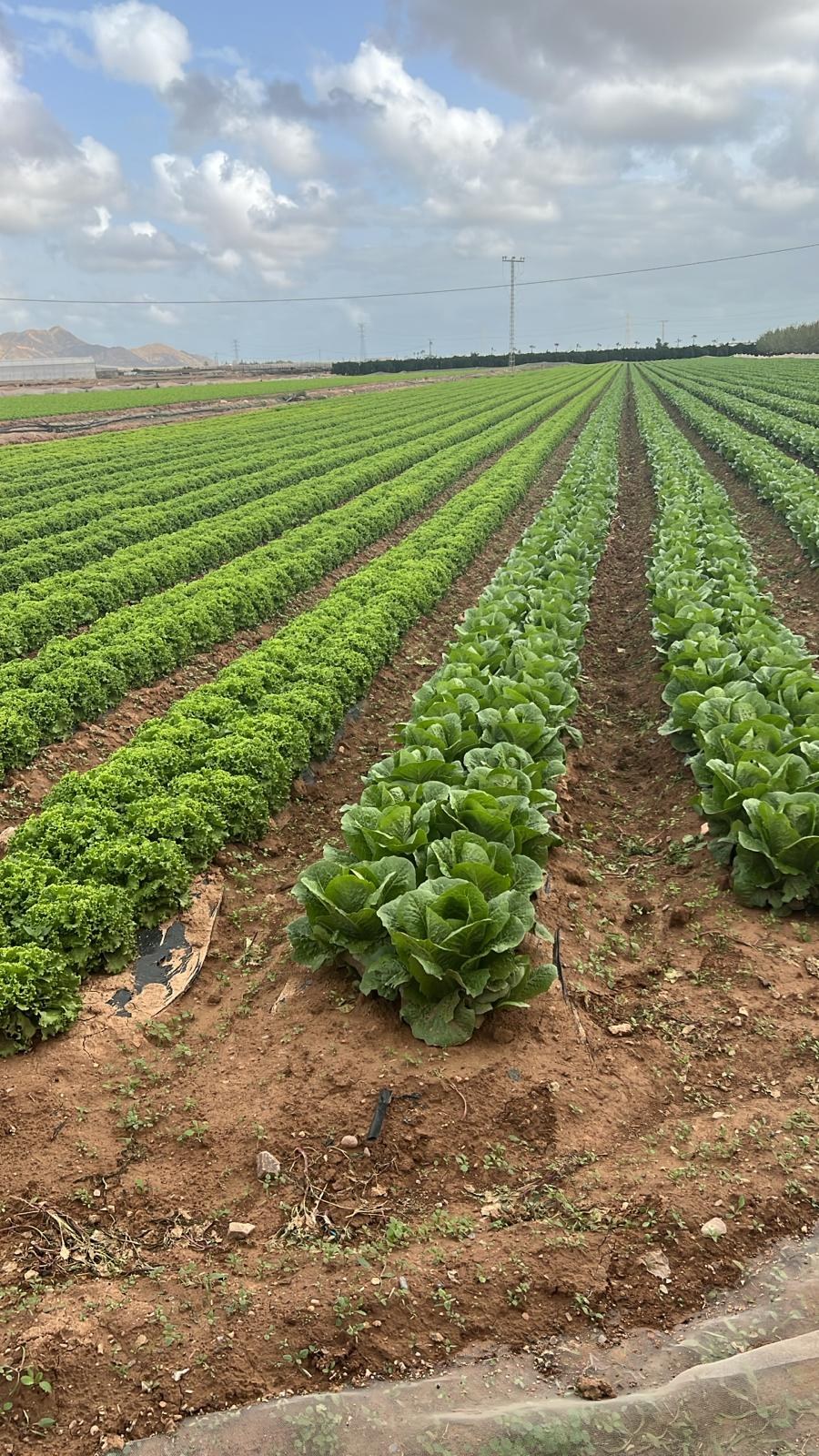
PRECISION IRRIGATION
Secure the water resource
before selecting equipment.
Every agricultural installation rests on five prior decisions: securing the available volume, assessing water quality, anticipating seasonal changes, evaluating existing infrastructure and setting water abstraction limits.
Availability
Boreholes, rivers, reservoirs, abstraction points and usable volumes.
Quality
Salinity, alkalinity, minerals, contaminants and microbiological analyses.
Seasonality
Dry-season flows, effective rainfall and competing uses.
Infrastructure
Networks, stations, tanks, pressures and hydraulic losses.
Compliance
Permits, land rights, abstraction limits and environmental obligations.
- Location, catchment areas and surface areas
- Hydrogeology and pumping tests
- Physical and chemical water analyses
- Climate and monthly crop requirements
- Plans and condition of existing networks
- Abstraction, rehabilitation or transfer?
- What area can be irrigated?
- How much water must be stored?
- What treatment is actually needed?
- How should water be allocated between soil irrigation and NFT?
The usable area follows from the sustainably available water resource, rather than the reverse.
A complete water chain.
Consistent system sizing.
Treatment, flow rates and safety levels must be differentiated by use: soil irrigation and the NFT circuit do not necessarily require the same treatment or pressures.
Design flow rates, pressure losses, pumping durations, storage and photovoltaic capacity together.
* Engineering example based on explicit assumptions, to be recalculated for the crops, season, terrain and actual equipment efficiency.
Understand the soil.
Size the water supply available to roots.
Irrigation network design starts with the hydraulic behaviour of the plots: water retention, infiltration, root depth and drainage capacity.
Sand, silt, clay, organic matter, compaction and aggregate stability.
Field tests: absorbable flow without runoff or waterlogging.
Field capacity, wilting point and rooting depth.
Slopes, potential erosion, bed length and available pressure.
pH, conductivity, exchangeable sodium and water–soil–crop compatibility.
Water table, standing water, outlets, discharge quality and root health.
Soil is a living reservoir: irrigation means keeping water available in the root zone, without oxygen deprivation or unnecessary leaching.
Three irrigation approaches.
A choice based on field conditions.
The method depends on crops, soils, terrain, wind, available water and operating resources. The technology must be justified by a technical and economic assessment.
Drip irrigation
Localised, frequent applications near the roots, organised by sector. Designed around emitters, filtration, pressures and the crop calendar.
Sprinklers & pivots
Wide coverage suited to specific cropping systems and plots, subject to infiltration rate and wind effects.
Gravity & furrows
Supplying plots through slope and surface flow. Suitable when topography, infiltration and volumes are compatible.
Soil type · slope · crops · water quality · energy availability · costs · local expertise.
Size a maintainable solution, rather than systematically favouring the most sophisticated method.
Precision is built
into every network segment.
Flow rate, pressure, filtration and sectoring must be consistent from the pump to the last emitter. A well-designed installation ensures uniformity across plots and simplifies maintenance.
Elevations, friction, regulators, water hammer and end-of-line checks.
Emitter selection, lengths, compensation and actual flow per sector.
Sand, discs, screens, raw water quality, flushing and differential pressure.
Flush points, component access, clog detection and spare parts.
Sector flow = number of operating emitters × nominal flow per emitter, corrected for actual pressure conditions.
Apply the right amount.
At the right time, in the right soil.
Irrigation is scheduled using climate, crop stage, effective rainfall and the water remaining in the root zone. The aim is to avoid both water stress and excessive percolation.
Rainfall, ET₀, moisture, flow rate and pressure.
ETc, effective rainfall, depletion and net application.
Watering duration, sectors, timings and fertigation.
Sensor feedback, crop condition and season.
Low storage, rapid infiltration: shorter, more frequent applications.
Greater storage but sometimes slow infiltration: adjust applications to avoid runoff.
Agronomic thresholds must be set using soil analyses, field tests, root profiles and local climate. Sensors complement observation; they do not replace it.
Reliable irrigation
is verified in the field.
Performance does not depend solely on the equipment chosen. It depends on commissioning measurements, correct adjustment and a maintenance programme suited to the water source.
A network organised by sectors.
Flow balances, pump curves, pressure losses, terminal pressures, pipe diameters, valves and backflow prevention devices.
- Mapping irrigation blocks
- Selecting peak flows by rotation
- Flush points and drainage devices
- Metering at the inlet and sectors
Water and nutrients under control.
Applying fertiliser through irrigation requires verifiable dosing, chemical compatibility and protection of the water network against any backflow of solution.
- Suitable injectors / dosing pumps
- Monitoring volumes and concentrations
- Backflow prevention and operator safety
- Flushing and deposit checks
Pressure, alarms, filter condition, water applied and visible leaks.
Measured flows, cleaning, flushing, calibration and chemical checks.
Uniformity, component replacement and hydraulic and energy balances.
Measurable flow rates, verifiable uniformity and maintenance achievable with locally available skills.
Protect the crops.
Preserve the fertility of the plots.
Irrigation increases water availability, but can also concentrate salts, degrade soil structure or cause waterlogging. These effects must be anticipated during design.
Water · salts · oxygen
Irrigation water quality must be assessed alongside soil texture, crop tolerance and actual drainage options.
Identify water and soil salinity risks for the crop.
Assess sodicity, clay dispersion and the soil’s ability to absorb water.
Monitor water table depth and persistent standing water.
Design discharge arrangements compatible with environmental requirements and permits.
Avoid excess nitrogen and leaching below the roots.
Water and soil analyses, EC measurements and yield records.
Salt leaching is only feasible when water supply, drainage and effluent management are sufficient and authorised. Higher water consumption is not a default solution.
One soilless technology.
Nutrient Film Technique.
NFT uses a film of nutrient solution circulating through slightly inclined channels. Roots receive the water, minerals and oxygen needed for suitable crops to grow at the same time.
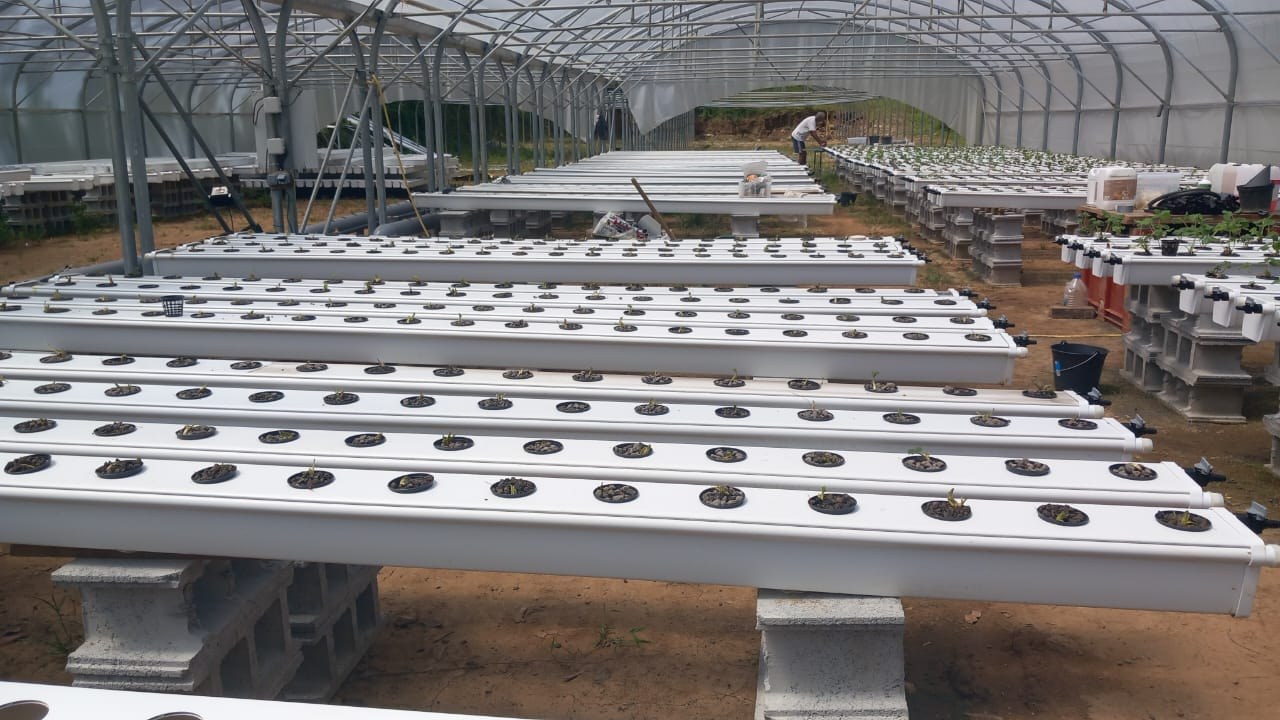
Leafy vegetables and herbs
Lettuce, basil and selected local species, subject to agronomic trials and commercial validation.
Reliability and water control
Continuous circulation or circulation suited to the chosen process, nutrient stability, circuit hygiene, temperature monitoring and backup power.
A recirculating circuit.
Continuously monitored parameters.
NFT system performance depends on the entire circuit: water reserve, nutrient preparation, pumping, channels, return, sanitary treatment and electricity supply.
Setpoints suited to the crop and growth stage; stock solutions, calibration and adjustment.
Channels, slopes, uniform distribution, return recovery and sufficient reserves.
Tanks protected from overheating, ventilation and root-zone monitoring.
Cleaning, filtration, biological monitoring and return treatment when needed.
A backup pump, emergency power supply, flow alarm and intervention procedure must be defined: in NFT, a prolonged interruption of circulation can quickly expose roots to drying out.
Open-field cultivation for volume.
Hydroponics for precision.
Two complementary approaches can coexist: plot irrigation sized for vegetable production and NFT modules dedicated to suitable crops.
The selected architecture allocates areas, water, energy and skills according to each site’s agricultural objectives.
Solar power is sized
with the hydraulic system.
Electricity production must meet the hourly demand profiles of pumping, treated water, fertigation, NFT circulation and postharvest needs.
Store water when the use allows it
Pump during solar hours, build a reserve and reduce battery requirements when irrigation can be shifted.
Protect critical functions
Maintain NFT circulation, aeration, controls, alarms and refrigeration when an interruption would endanger production.
Optimise cubic metres transported, kilowatt-hours consumed and the cost of service availability.
Demonstrate performance
before replication.
The first installation must validate a complete chain — resource, infrastructure, crops, maintenance and market outlets — under representative operating conditions.
Vegetable growing with precision irrigation
NFT production, validation and training
Water & energy
Authorised abstraction, solar pumps, storage, necessary treatment, network and safety.
Production
Irrigated plots, NFT channels, sowing, fertigation and agronomy.
Operations
Operators, maintenance, data, packing and distribution.
Indicative demonstration scale. Areas, capacities and yield commitments will be defined after site assessment and crop trials.
Design and operate
a single architecture.
The project should not simply combine separately purchased equipment. Unified technical management coordinates interfaces, execution quality and operational continuity.
Study
Water, climate, plots, needs, land constraints and market.
Design
Hydraulics, electrical systems, irrigation, NFT and postharvest.
Deploy
Procurement, works, checks, commissioning and acceptance.
Transfer
Training, maintenance, data, monitoring and improvement.
Water, energy and cultivation must share the same design assumptions.
An organisation adapted to the country
MSR technical coordination and mobilisation of qualified skills in each country: hydraulic studies, construction, agronomy, operations and maintenance.
The arrangement combines design responsibility, construction companies and local operators, according to the agreed scope and applicable obligations.
Design for the long term.
Prevent risks from the study stage.
Technical and institutional viability depends as much on permits, local skills and maintenance as on crop selection.
Pumping tests, dry-season balance, storage and abstraction limits.
Prior analysis, crop selection, targeted treatment and effluent control.
Ventilation, solution temperature, circuit monitoring and sanitary protocols.
NFT redundancy, protected automation, alarms and backup capacity.
Repairable equipment, local spare parts, training and procedures.
Buyer analysis, crop calendar and cost per marketable kg.
Permits to integrate
Assessment of competent authorities by country, water use rights, impacts and effluent management.
Qualified expertise
Authorised engineers and contractors, compliant electrical and photovoltaic installations.
Established responsibilities
Land access, beneficiaries, public procurement arrangements, operations and maintenance.
Infrastructure should only be replicated after agronomic, technical and economic validation in actual operation.
From study to implementation.
With decisions at every stage.
Deployment follows a gradual path that secures technical parameters and investment before each commitment.
Institutional scoping
Mandate, authority, scope, beneficiaries and sites.
Integrated feasibility
Water, climate, soils, crops, electricity, market outlets and costs.
Detailed engineering
Plans, sizing, permits, work packages and warranties.
Construction & acceptance
Installation, testing, training and agricultural start-up.
Validation & expansion
Measurements, operational feedback and selective replication.
Investments structured in stages.
The programme can be assessed as a public investment, development partnership, export financing arrangement or commercial project. Eligibility and contracting conditions are established country by country.
Financing, public procurement and installation ownership assumptions will be clarified with the competent authorities and partners in each country.
A common architecture.
A response tailored to each country.
Integrated engineering of water, soil irrigation, NFT and solar energy provides a programme foundation. Its final configuration depends on the resources, crops and priorities of the territory concerned.
This proposal can be updated and adapted to the needs of each African country, then developed at the scale of a region, agricultural basin or specific site.
Rainfall, dry season, aquifers, surface water and local hazards.
Texture, infiltration, drainage, slopes and available land.
Local species, sales calendar, market outlets and logistics.
Electricity, abstraction points, networks, roads, workshops and suppliers.
Abstraction, environment, construction and public procurement.
Area, objectives, budgets, phasing and operating capacity.
Develop a feasibility study tailored to the country and sites.
Initial analysis, resource and system sizing, preliminary budget, implementation plan and operating conditions.