Photo: Guilherme Pedrosa / Pexels
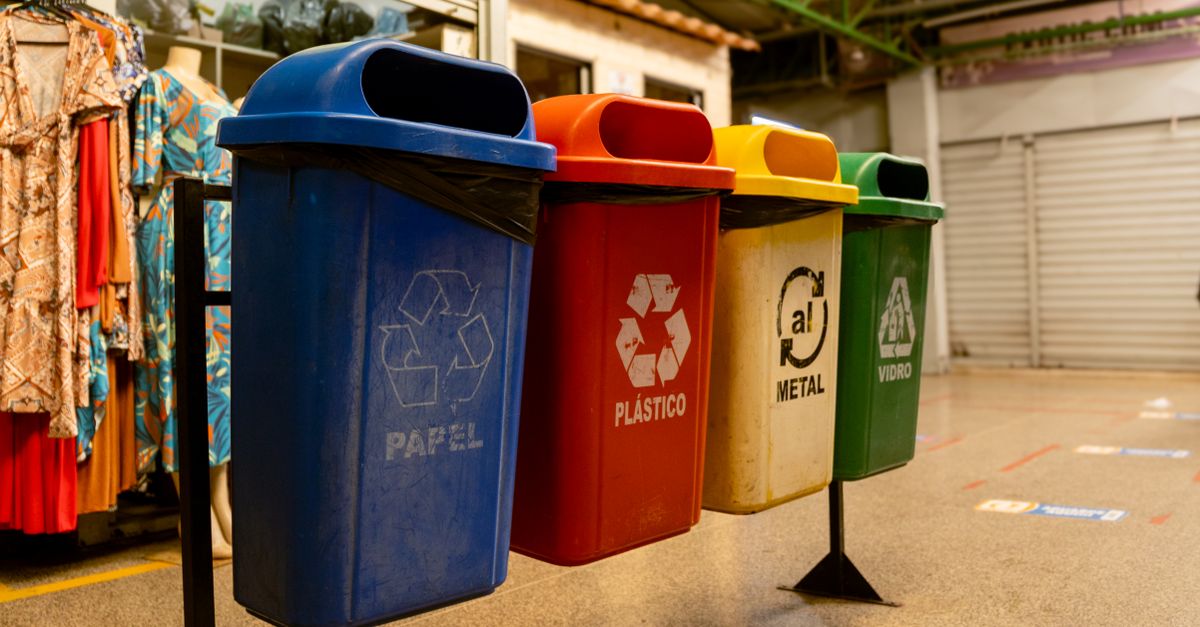
Compliance does not mean buying nine identical bins. Identify the waste your business produces, separate it under the applicable rules and arrange its destination. Different counts reflect additional categories and inconsistent terminology. In the historical count, paper and cardboard form one family: counting them separately changes the number without changing the obligation.
What do the different stream counts mean?
| Term | Meaning | Practical implication in 2026 |
|---|---|---|
| 5 streams | Historical paper/cardboard, metal, plastic, glass and wood categories. | No longer a complete description of all potentially applicable categories. |
| 6 streams | Ambiguous: sometimes the historical five plus biowaste, sometimes plus textiles. | Ask for the actual list; this is not a separate legal regime. |
| 7 streams | Historical five plus mineral fractions and plaster for construction/demolition waste. | An office without construction waste need not invent those streams. |
| 8 streams | The previous seven plus textiles, included since 1 January 2025. | Apply within the regulatory scope to waste actually held. |
| 9 streams | Common shorthand for the eight plus biowaste, subject to its own obligation. | Biowaste source separation has been generalised since 1 January 2024, without the old tonnage threshold. |
Environmental Code Articles D543-278 and D543-281 define the relevant non-hazardous categories. Mineral fractions and plaster are covered here for construction and demolition waste. Biowaste has a separate source-separation requirement. Use the legal scope and your inventory, rather than a supplier's advertised bin count.
French Environmental Code, section 18: scope and categories
Does being below 1,100 litres exempt a small business?
Not automatically. D543-280 applies this subsection to producers/holders not using the specified local-authority collection service, without a volume threshold, and to those using that service who produce or take possession of more than 1,100 litres of all waste combined per week. Where several businesses share a location and the same waste-management provider, the article provides for considering the total for that location.
| Situation | How to read the threshold |
|---|---|
| Private collection, 400 L/week | Being below 1,100 L does not by itself remove this subsection's obligations. |
| Relevant public service, 1,400 L/week | The more-than-1,100 L threshold is exceeded. |
| Relevant public service, 800 L/week | This subsection's volume criterion is not met; other obligations and local service rules still need checking. |
| Same site/provider: two businesses producing 700 L and 600 L | Examine the 1,300 L combined total, not just each business separately. |
The threshold does not remove separate biowaste obligations, hazardous-waste rules or local collection conditions. Record volumes and collection arrangements in the site assessment. Litres are not tonnes: a conversion needs waste-specific information rather than an assumed universal density.
D543-280: private/public collection and the more-than-1,100-litre threshold
Which streams occur in your business?
| Activity | Check for | Practical arrangement |
|---|---|---|
| Offices and break areas | Paper/cardboard, packaging, glass where present and food waste | Place collection points near use; separate biowaste and agree instructions with the collector. |
| Warehouse or retail | Cardboard, plastic film, pallet wood and metal | Separate during unpacking; keep materials clean/dry to the buyer's requirements. |
| Workshop or textile activity | Textile offcuts, plastic, metal, wood and possible hazardous waste | Identify composition/contamination; assess a contaminated rag's hazardous properties before classification. |
| Construction or renovation | Relevant previous streams plus mineral waste and plaster | Arrange suitable storage/collection; keep plaster outside the mixture derogation in D543-281. |
Office paper also has a specific rule in D543-286 for locations grouping more than 20 people whose work normally generates such paper. Shared locations must be considered. More than 20 is not the same as 20 or more; total headcount without checking the relevant functions can mislead.
D543-280 provides construction-site derogations from this subsection where the site cannot allocate at least 40 m² to waste storage, or total waste over the project is less than 10 m³. These are not a general exemption from proper waste management. Document the actual condition and check other applicable rules.
Can several materials share a collection bin?
D543-281 permits all or some paper, metal, plastic, glass, textile, wood and mineral fractions to be kept together if this does not compromise preparation for reuse, recycling or recovery and achieves efficiency comparable to separate collection. Plaster is excluded from this derogation. Biowaste and hazardous waste do not become acceptable because a container is labelled mixed recycling.
Obtain the collector's written acceptance list, exclusions, destinations and evidence that sorting/recovery meet those conditions. A recyclable label on packaging does not establish acceptance in that service. An undifferentiated general-waste skip without the required demonstration does not satisfy the mixture derogation.
D543-281: conditions for joint collection and exclusion of plaster
What do the biowaste and textile rules change?
Since 1 January 2024, source separation of biowaste applies to all professionals producing or holding it. Small amounts of food leftovers do not preserve the former tonnage-based reasoning. Arrange separate collection or an appropriate on-site recovery solution, including its operating requirements. Check break areas as well as canteens.
French environment ministry: generalised biowaste source separation
For textiles included since 2025, distinguish reusable clothing, industrial offcuts and contaminated material. A household clothing collection point does not automatically accept industrial scraps. Choose an outlet compatible with composition and contamination, and ensure cleaners preserve separation throughout internal collection.
What evidence and annual certificate should you keep?
D543-284 requires the relevant facilities and intermediaries to issue an annual certificate before 31 March for the preceding year's transferred waste. It records nature, quantities in tonnes and final recovery destinations. For 2026 transfers, follow up early enough to receive it before 31 March 2027. An invoice or collection slip lacking these details does not provide equivalent evidence.
D543-284: annual certificate, version amended in June 2026
- Site/activity inventory, collection arrangements and reasons for any threshold or derogation relied upon.
- Contracts, material acceptance instructions and checks that providers are authorised for your waste.
- Collection slips, weighing records, annual certificates and the waste register where required.
- Evidence supporting permitted mixtures, staff instructions and checks of internal cleaning/collection.
- Documents for specific waste streams, including applicable hazardous-waste tracking through Trackdéchets.
Does compliance require a baler or shredder?
These rules do not require every business to buy machinery. A baler may reduce collection trips for already separated cardboard or film if the receiving operator accepts the bales. A shredder does not separate polymers and may make a stream unsuitable for a buyer expecting whole items. Agree the outlet first, then assess equipment against actual tonnage and logistics costs.
Plastic recycling lines: from separated waste to an accepted product
Assess the equipment business case after establishing separate streams
A practical implementation sequence
- Observe a representative week: where each waste appears, its volume and actual sorting mistakes.
- Agree acceptable materials and mixtures with the collector, then size containers and collection frequency.
- Use pictures of your actual waste beside collection points, not only abstract symbols.
- Include purchasing, operations and cleaning staff; check internal collections do not mix separated streams again.
- Review rejected loads and collections after launch, adjust instructions and schedule annual certificate follow-up.
The public presentation of ADEME's nine-stream study, published online on 28 September 2026, reports uneven sorting practices and suggests clear signage, awareness and an adapted method. It does not create a new legal obligation. Check whether the system works in practice rather than counting bins. MSR can study equipment for segregated materials and volumes; the site's legal requirements must be assessed against its activities.
ADEME: nine-stream sorting in service-sector buildings — study presentation
Discuss equipment for my separated wasteFurther reading
- Service Public Entreprendre — waste management, checked 7 August 2026
- French Environmental Code — scope, sorting and office paper
- D543-280 — collection threshold and construction-site derogations
- D543-281 — conditions for joint collection
- D543-284 — annual certificate, June 2026 version
- French environment ministry — biowaste separation
- ADEME — nine-stream study, online 28 September 2026