Photo: Sergei Starostin / Pexels
A brochure may say that one tonne of tyres makes oil, carbon black, gas and steel. That is a list of possible streams, not a measured plant result. The useful questions are: Which tyres went in? What left the boundary of the test? Which fraction passed a buyer's specification? Follow the material and the answer becomes much clearer.
Read the process as two paths out of one reactor
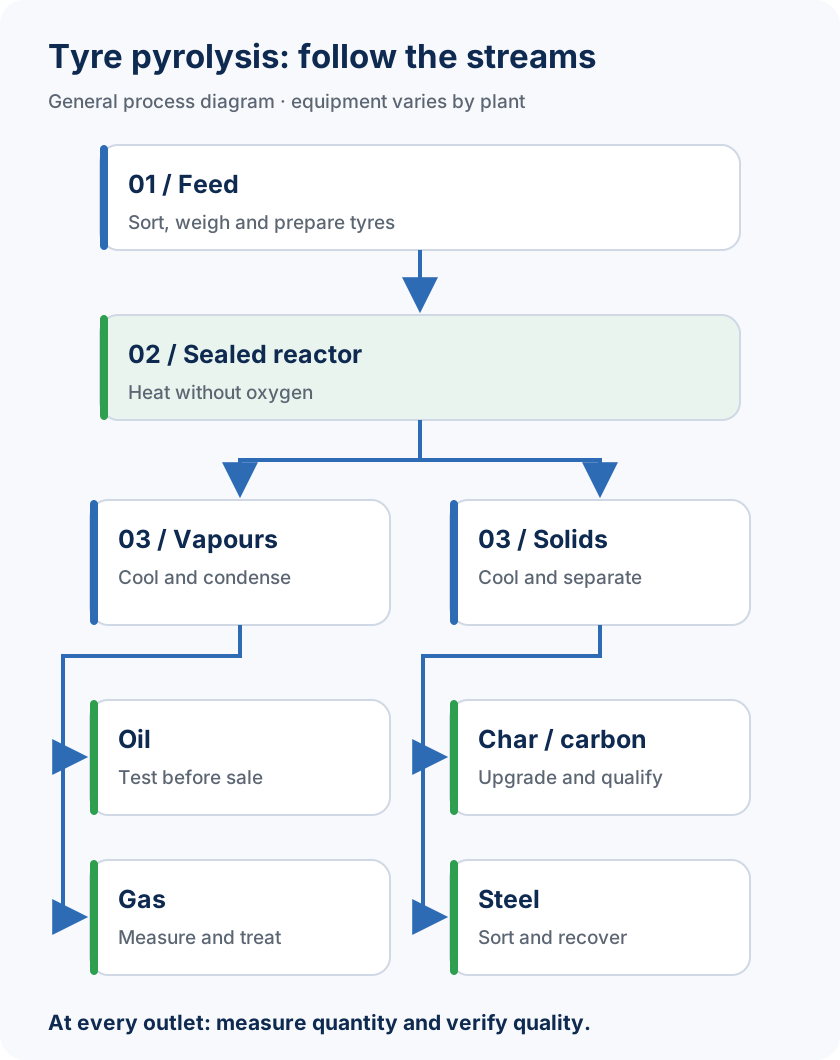
Tyres are sorted, weighed and prepared for the feed system. A sealed reactor heats the rubber without oxygen. Vapours leave for cooling: the condensable part becomes pyrolysis oil, while the remaining gas is measured, treated and either used as process fuel or handled by another approved route. The hot solids are cooled before steel is separated from carbonaceous char. This is not combustion inside the reactor; using the gas in a burner still creates an exhaust stream that needs controls.
| Point in the line | Record this | Why it changes the answer |
|---|---|---|
| Incoming tyres | Mass, tyre mix, moisture, dirt, textiles and whether steel is removed upstream. | A tonne of whole tyres is not the same test basis as a tonne of clean rubber crumb. |
| Reactor | Feed rate, operating temperature, residence time, air-exclusion method and stops. | Conditions change the split between vapour, gas and solid residue; interruptions affect the average. |
| Condensation | Collected liquid mass, separated water, sampling point and condenser conditions. | A higher liquid number is not useful if the oil is off-spec or includes water. |
| Solids and gas | Char, steel and rejects by mass; gas flow and composition; auxiliary fuel and electricity. | Unmeasured gas or fuel use can make both the material and energy claims look better than they are. |
Use one tonne to check the arithmetic
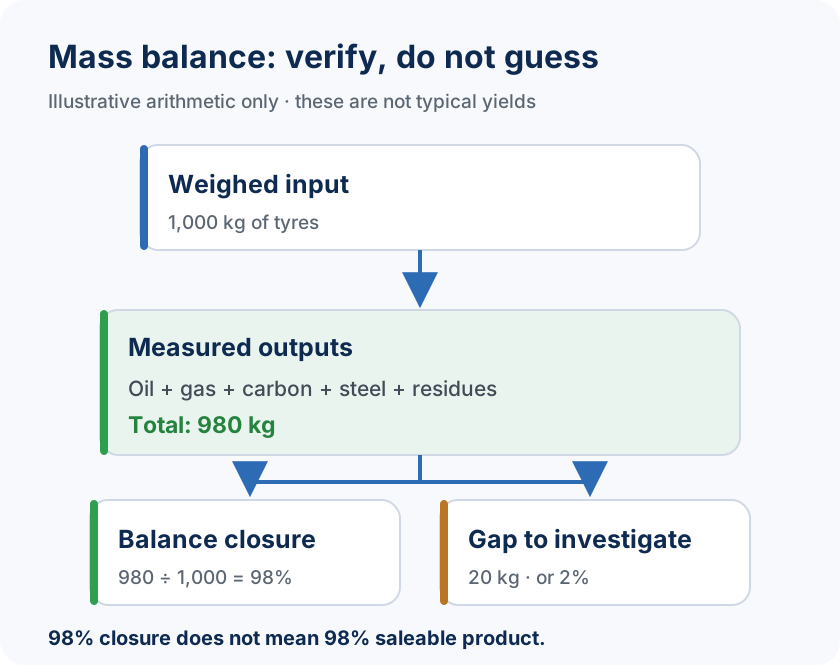
Imagine weighing 1,000 kg of incoming tyres and recording 980 kg in oil, gas, carbon material, steel and residues combined. Closure is 980 ÷ 1,000 = 98%; the 20 kg difference needs investigation. It is not automatically an emission or a loss of saleable product. Check scale uncertainty, moisture, retained material in equipment, condensate, dust and how gas was metered. State clearly whether the basis is whole tyres, dry tyres or de-steeled rubber, and record any added material separately. Never compare two supplier yield tables until they use the same boundary and basis.
Four fractions, four different buyer questions
| Stream | What to verify before calling it a product |
|---|---|
| Pyrolysis oil | Ask for a representative laboratory analysis and the buyer's limits for water, sulphur, viscosity, distillation range and contaminants. Raw pyrolysis oil is not automatically road diesel. |
| Char / recovered carbon black | Raw char can contain mineral ash and residual organics. Ask which cleaning, milling or pelletising steps are included, then test the finished material against the intended application. ASTM D8632 classifies rCB for rubber use; a char yield alone is not an rCB sales specification. |
| Non-condensable gas | Measure volume and composition, then document clean-up, safe use or disposal, heat recovered and burner emissions. 'Self-sufficient' needs a measured net energy balance. |
| Recovered steel | Weigh it separately and check rubber or carbon contamination, handling costs and the scrap buyer's acceptance criteria. |
The distinction between raw char and qualified recovered carbon black matters commercially. In a rotary-kiln experiment, changing process conditions changed both the oil outcome and properties of the recovered carbon. ASTM's current rCB classification also treats the final, post-processed filler as a distinct product. A laboratory result from one tyre mix should not be copied into a sales forecast for another.
What a credible demonstration should hand over
- A dated log of representative feedstock, including tyre types, contamination and the exact mass basis.
- A continuous trial record with start-up, steady operation, stoppages and shutdown reported separately.
- A complete material balance with measurement methods, uncertainty and destinations for rejects and residues.
- An energy balance covering imported fuel, electricity, gas use and heat rejected to cooling.
- Independent product analyses from representative samples, matched to named buyer specifications.
- A site-specific plan for air emissions, water, storage, fire safety and permits before a commercial claim is made.
MSR Environnement is developing a tyre-pyrolysis project. The practical next step is to define the feed, the test protocol and the product outlets before treating any quoted yield as a business case.
For rubber granulate: choose a mechanical shredding and separation line
Discuss a tyre-pyrolysis project with MSRFurther reading
- Experimental rotary-kiln study: process conditions, oil and recovered carbon quality
- Experimental flash-pyrolysis study: measured mass balance and gas handling
- ASTM D8632-26: classification of recovered carbon black for rubber products
- European Commission CORDIS: tyre pyrolysis and sulphur-treatment project